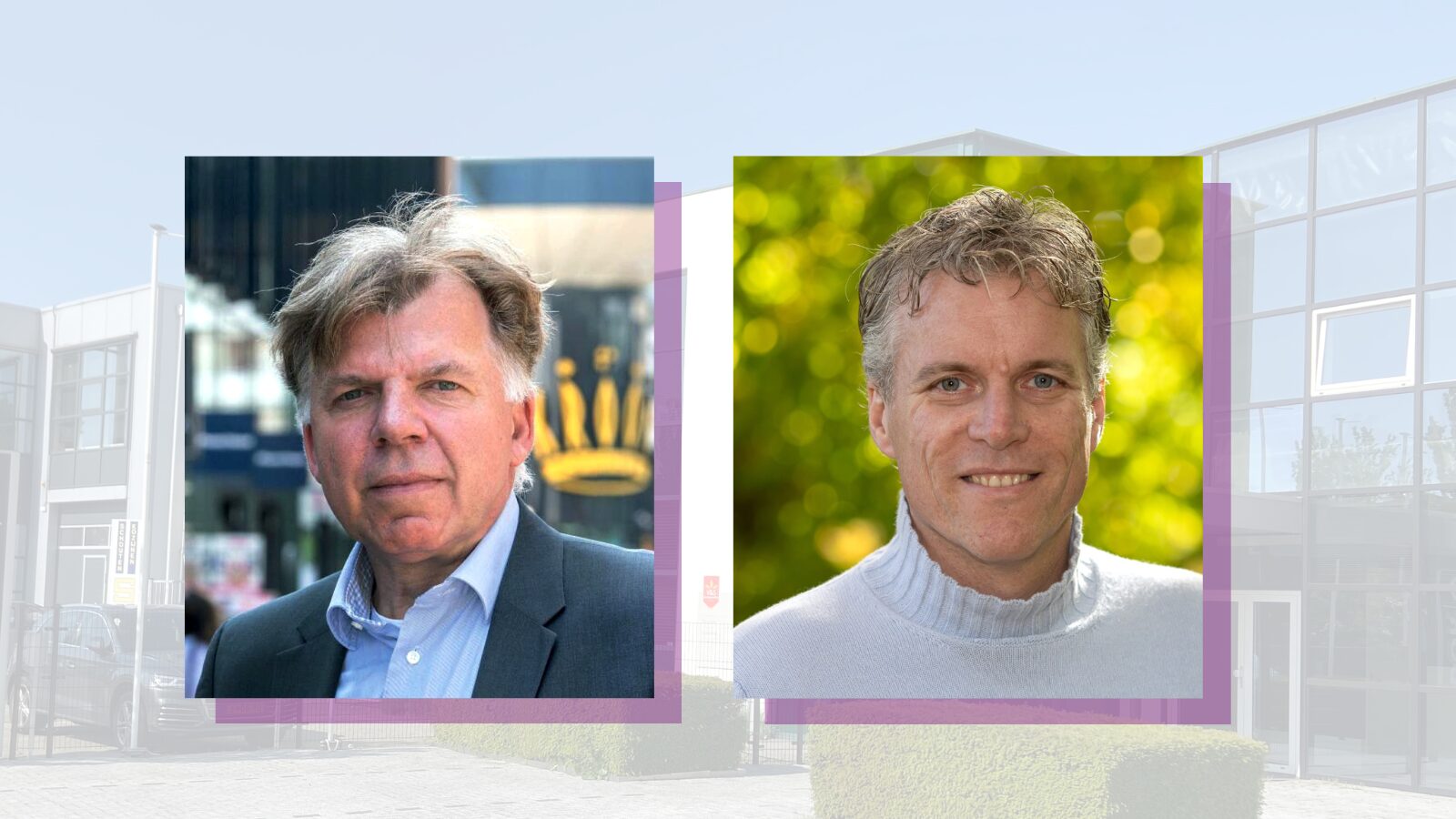
To ensure that the new municipal councils of Katwijk, Leiden, Voorschoten, and Zoeterwoude* will soon be able to make a well-informed decision regarding the Spatial Development Corporation for Industrial Parks (ROM-B), several concrete business cases will be developed in the coming period. These will provide insight into what a ROM-B can offer, the associated costs, and the risks involved. To this end, the Key Region Leiden team will be expanded for 9 months to include two area developers. They will each devote 16 hours per week to working on the business cases.
Let Me Introduce Myself
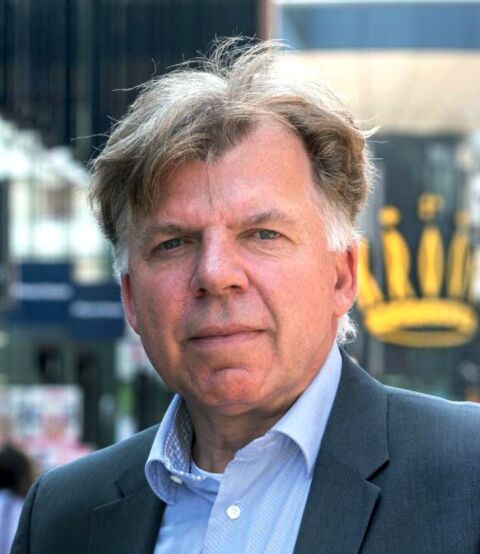
Paul Tankink, senior area developer at ROM-B
Paul Tankink will become the senior area developer at ROM-B. He has extensive experience in project development, area development, commercial real estate, and real estate funds. Currently, he is primarily active as a business park developer, mediator, and supervisor in both the public and private sectors. He holds a number of board and supervisory positions but is particularly actively involved in business relocation processes at ROM-D in the Drechtsteden region. Previously, he worked in the financial real estate sector and served as a board member of various publicly traded real estate funds.
Tankink: “There is a great need in the Netherlands to increase the density and sustainability of existing business parks and work sites. I am happy to contribute to this type of area development, which is of enormous social and economic importance.”
The assignment for Paul focuses on:
- redevelopment and densification of industrial parks;
- developing feasible business cases;
- discussions with entrepreneurs, municipalities, and investors;
- financial and spatial analyses;
- building support within public-private partnerships.
Richard Boot, Area Developer at ROM-B
Richard will serve as the area developer for ROM-B. He has extensive experience in the field of spatial economics. More specifically, he specializes in formulating strategies for area development and business relocation issues and then implementing them. He currently serves as the Spatial Development Cluster Manager for the municipality of Alblasserdam and as a project manager at ROM-D, the 100% publicly owned implementing organization for the Drechtsteden region. He is particularly closely involved in the redevelopment of the former Nedstaal site and the associated, high-risk business relocation. Richard also oversaw the previously completed relocation of Peute from start to finish on behalf of ROM-D and the municipality of Alblasserdam. In his municipal role, Richard is leading the transformation of the Mercon-Kloos site into 275 housing units, as well as various other projects. Previously, he worked as a strategic advisor and policy officer for spatial planning at the municipalities of Alblasserdam, Papendrecht, and Zederik.
Richard: “Governments can make a much bigger difference for society. I prefer decisive and action-oriented measures in the here and now to creating new policies and visions in the hope that they will change the future. By actively taking on the challenge, a government demonstrates that it recognizes the task at hand and wants to be part of the solution. Collaboration is the path forward, and trust is the foundation. I am therefore eager to contribute to accelerating area development and business relocation at the regional level.’

Richard’s assignment focuses on:
- developing business cases;
- research on the redevelopment of industrial parks;
- stakeholder management;
- analyses of opportunities, risks, and financing;
- collaboration with municipalities, business owners, and consultants.
The area developers are working closely with Paul Vismans, who, as the ROM-B facilitator, is guiding the decision-making process among the municipalities involved.
Background
The business cases focus on existing and new industrial park locations where the market is not developing sufficiently, but which are nonetheless important for the future of these areas. This includes creating more jobs, greening and making the sites more sustainable, and making better use of the land. Through this collaborative effort, the new municipal executive boards and city councils will soon have a clear and comprehensive picture of the feasibility of the business cases, enabling them to make a well-informed decision regarding the ROM-B.
The project is a pilot initiative under the RIA agenda of the Holland Rijnland Region.
*Oegstgeest is not participating in this agreement because there are no sites within that municipality that are covered by the business cases. Oegstgeest will, however, remain involved in the further exploration of a ROM-B. The municipality of Leiderdorp has previously decided not to participate in the ROM-B for the time being. The municipality of Noordwijk is a partner in the “Strengthening the Knowledge Axis” component and falls outside the scope of this project.
- Be sure to check out the ROM-B fact sheet as well.
- More information can be found on the ROM-B project page.
- If you’d like to stay informed, subscribe to our newsletter.
- Learn more about the background in an interview with Willem Jan Zirkzee, chair of Ondernemend Leiden, and Jacco Knape, former alderman for the municipality of Katwijk.

Area developers get started on ROM-B business cases
23 July 2026
Municipalities record cooperation for ROM-B exploration
23 April 2026
Next process step in exploration creating space for businesses
10 December 2025
Inspiring working visit to ROM-D in the Drecht cities
28 October 2025
‘Where you live, you must also be able to work’
3 June 2025
Paul Vismans started as quartermaster ROM-B
7 April 2025

