As an entrepreneur, do you want to innovate or digitize, but don’t know where to start? Then we have a great offer. Through Key Region Leiden you can make use of innovation and digitization vouchers. With these you get help to take new steps in your business. Key Region Leiden helps entrepreneurs to grow in the region. On this page you can read more about the offer. Via our separate project website (click on the button below) you can apply for the voucher.
Next steps
New round opens on May 11
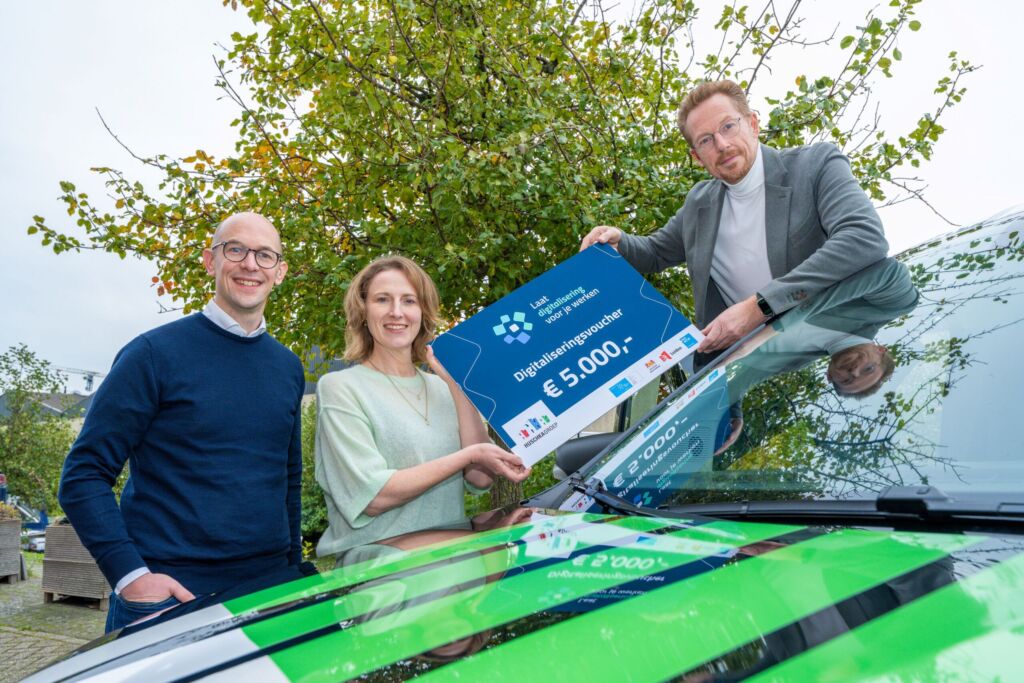
On May 11, noon, we will open a new voucher round via Digitaliseringwerkt.nl (our project website). This scheme is specially designed to support SMEs in the municipalities of Katwijk, Leiden, Leiderdorp, Voorschoten and Zoeterwoude in their digitization efforts. Entrepreneurs can receive up to €5,000 back from their investment. Please note: when applying, you will need a quote from your supplier.
“In recent years, our program has been very successful in supporting entrepreneurs. Therefore, we are very happy to issue a good number of vouchers again in the coming years, with the first opportunity in 2026 on May 11,” said project leader Dwayne van der Klugt.
What is the voucher scheme?
The voucher scheme is a financial incentive that helps companies digitize their operations. The voucher can be used for a wide range of digitization projects. Think of digital marketing, such as improving a website or webshop, but also cyber security. Depending on the size of the company, an entrepreneur can receive € 1,000, € 2,500 or € 5,000. This always requires the entrepreneur to contribute at least 25% of the costs himself.

How to Apply.
Companies registered in one of the participating municipalities and employing up to 50 FTEs can apply. Applications can be submitted starting May 11 at noon via the form on the website. Should there be more applications for vouchers in the first 48 hours after opening than there is budget, lots will be drawn. In principle, the assessment will take place within ten working days.
The application itself only takes a few minutes, but some preparation is necessary. Therefore, entrepreneurs are advised to act now and prepare their application. Three coaches are available to help with this. Scheduling an appointment can also be done through the website.

Workshops and coaching
Take a practical workshop and take immediate improvement steps within your company. Choose from:
- May 19: Findable with AI
- May 26: Creating content with AI and Canva
- June 9: Linkedin with AI for your business
In addition, there are opportunities for coaching. Choose what suits you:
- 1-on-1 Coaching: The 1-on-1 course is designed for entrepreneurs who are looking for depth and want to work specifically on their digitization issue. Together with an experienced digitization coach you will work on your specific situation.
- Coaching by students: In coaching by students, you get practical support from well-supervised students from the region. For example, they will help you develop, test or apply digital solutions within your company, such as improving online visibility, deploying tools or optimizing processes.
- Long-term coaching: Long-term coaching is designed for entrepreneurs who want to tackle digitization structurally. Instead of one loose conversation, you work with a regular digitization coach over a longer period of time.
Complete the Digi-scan
Curious about where you are now with your company: fill out the Digi-scan. After 10 to 15 minutes you will know which profile fits your company and which next step you can take. With your personal score in your pocket, we would like to help you on your way with digitization!
Curious about entrepreneurs who have gone before you: read their experiences.