
How do we ensure the health and prosperity of the Netherlands in the coming decades? The answer lies in cooperation, innovation and boldness. Today, the Wennink Plan was published: an independent strategic advice that outlines how the Netherlands can remain economically resilient and socially strong. One of the key points? The crucial role of the red biotechnology sector as an engine for structural growth and better health. Leiden Bio Science Park had an important role in the development of this advice.
Red biotechnology could create 20,000 new jobs and provide a structural boost of 1.2 percentage points to GDP. The master plan proposes the creation of Biotech Nexus, a national program with high economic leverage: each public euro of investment leads on average to 2.5 euros of private investment and almost 2 euros of additional economic activity.
‘The Netherlands has a unique concentration of knowledge, companies and talent,’ says Esther Peters, director of the Leiden Bio Science Park. ‘Red biotechnology is a sector in which we can excel internationally. But then entrepreneurs need access to capital, space and modern procedures. If we organize these preconditions well, the sector can make an enormous contribution to our future economy. This is the time to push forward to prevent us from falling behind in the competition from the US and China.’

Strong advice
The advisory report of Peter Wennink (former top executive ASML), commissioned by the Cabinet, makes it clear that investing in innovation is necessary and that knowledge and vital innovation campuses are crucial in this. Leiden Bio Science Park was closely involved in providing valuable input for the report. In collaboration with partners from science, business and government with special thanks to Hollandbio and the Association for Innovative Medicines. Together they made clear what is needed to further strengthen the Dutch biotechnology sector.
The Wennink Plan emphasizes that a national approach is needed to position the Netherlands as the place where companies invest and where research is successfully transformed into innovations. The national proposal, BioTech Nexus, was explicitly mentioned by Peter Wennink as a strong and concrete example of this ambition.
Crossovers
As Key Region Leiden, we are proud to contribute to this national movement dedicated to strengthening the future earning capacity of the Netherlands. The resulting innovation offers our region pre-eminently many opportunities in terms of crossovers between the knowledge clusters Leiden Bio Science Park, NL Space Campus and Unmanned Valley. It is also our mission to strengthen this knowledge axis. This is not only good for the knowledge economy, but also for the local economy. It offers many opportunities for broad-based SMEs, service providers and suppliers.
‘The Netherlands has a strong Life Sciences & Health ecosystem with a lot of potential, but the home market remains the weak link,’ says Carla Vos, general director of the VIG. ‘The strategic growth plan will only work if innovations developed here are also made available here. Now spending on innovative drugs is low and access for patients often takes too long. If that improves, the Netherlands can maintain its position and even grow substantially.’

Unique opportunity
Why is this so important? Red biotechnology opens doors to treatments that were previously unattainable. It offers the Netherlands a unique opportunity: a sector that develops innovative medicines, therapies and diagnostics, contributes to a healthier society and creates high-quality employment, which in turn creates additional jobs for graduates of universities of applied sciences and intermediate vocational schools, in suppliers and in SMEs.
‘It is good to read that Wennink underlines the importance of Life Sciences & Biotech in his report,’ said Luc Sels, chairman of Leiden University’s Executive Board. ‘The Leiden Bio Science Park is the largest innovation district in the Netherlands in these fields. So with the wealth of knowledge and expertise we house in Leiden, we can not only continue to make a major contribution to Life Sciences & Biotech itself, but also contribute significantly to the further economic growth of the country. Good news for Leiden, for our region and for the Netherlands!

Global impact
The plans do not land in our region by chance. The Leiden Bio Science Park ranks among the top European universities and is the second largest campus in the Netherlands after Brainport Eindhoven. Start-ups, scale-ups, multinationals, education and healthcare come together here: from innovative mbo to a leading university college, university and academic hospital. The park has everything needed to realize groundbreaking solutions. But the Netherlands is too small to do this alone. That is why Leiden Bio Science Park works intensively with strong regional clusters such as Amsterdam, Utrecht, Oss, Delft, Groningen and Maastricht. Together they form a powerful economic network that makes an impact worldwide.
‘The advice identifies four crucial economic sectors, including life sciences & biotech. From Leiden, together with Amsterdam and Utrecht, among others, we have worked on a proposition. The Leiden Bio Science Park is among the top European parks and by acting together we can maintain and strengthen that position as the Netherlands,’ said Peter Heijkoop, mayor of Leiden.

Ready for the future
The required course is clear: invest in knowledge, talent and innovation to maintain and strengthen the international position of the Netherlands in life sciences & biotech. We do this not only for economic growth, but especially for people: for better healthcare, sustainable solutions and a society that is ready for the future. And this fits perfectly with Leiden Bio Science Park, the future of health and Key Region Leiden: Science for life!

Tech Discovery Days at Unmanned Valley
5 October 2026



SME grant for feasibility studies on innovations.
4 March 2026
Els Frankhuijzen bridges the gap between strategy and execution
9 February 2026
Leiden Bio Science Park core cluster in Wennink report
7 February 2026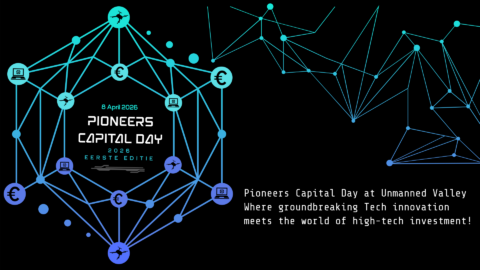
Pioneers capital day April 8, 2026
6 February 2026
Innovation is the key to your growth
13 January 2026