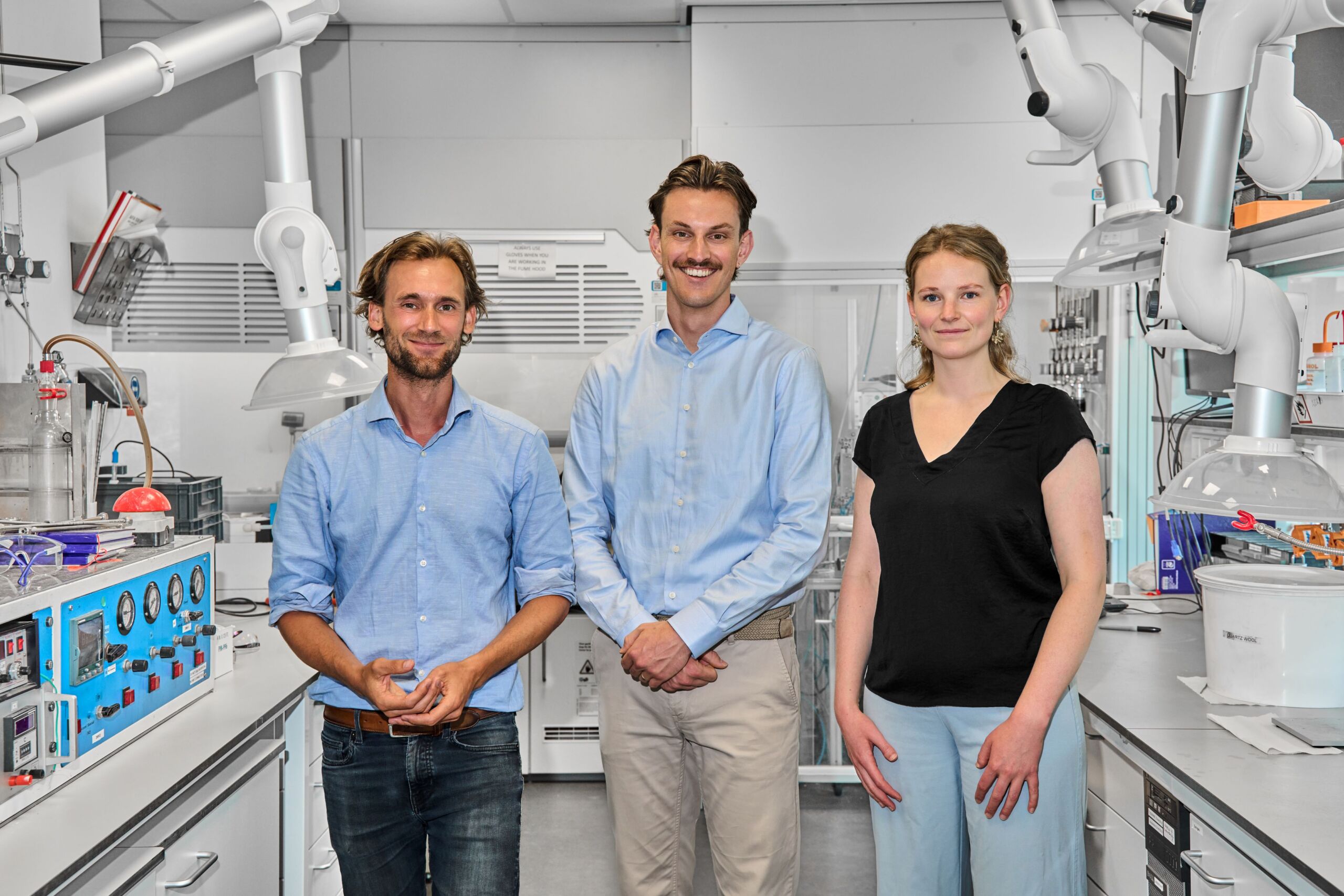
How does an idea evolve into a technology with the potential to transform an entire industry? In the Key Region Leiden, we’re seeing this happen more and more often. Startups start small, find their way, fall and get back up, and in the process, build solutions with a global impact.
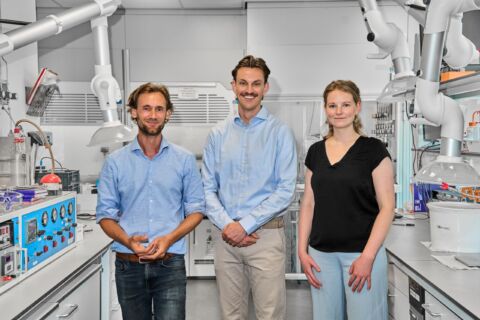
We spoke with Yordi Beelen, co-founder of Aefir Labs, about this. He talks about his entrepreneurial journey, the path from startup to scale-up, and the role of the ecosystem in that development.
In a nutshell
- Aefir Labs is working on one of the biggest challenges in the energy transition: making sustainable aviation fuel (SAF) affordable.
- Drawing on his background in chemical engineering and his experience at Delft University of Technology, Yordi combines his subject matter expertise with entrepreneurship at PLNT Leiden, Center for Innovation and Entrepreneurship.
- Through Aefir Labs (formerly Nera Energy), he uses artificial intelligence to make chemical processes smarter and more efficient. His goal is to accelerate the production of sustainable aviation fuel and make it more affordable. In doing so, he is contributing to cleaner aviation on a global scale!
It starts with the question: What problem am I solving?
For Yordi, it didn’t start with a well-defined business plan, but with a fundamental problem: how do you make sustainable jet fuel affordable? “The technology already exists,” he says. “It’s just that right now it’s six to eight times as expensive as fossil kerosene. That’s when you realize: there’s something here that simply has to be solved.” Yet, he says, those early days felt anything but like a business venture. “You don’t have all the answers at the start. In fact, you mostly have a lot of questions. That’s exactly what makes entrepreneurship interesting: you’re constantly discovering new things.” That initial phase requires courage, but also the ability to put things in perspective. “Many people see entrepreneurship as a huge risk. But at this stage, it wasn’t as bad as I’d expected. I didn’t have a house or a family, and I could pay my rent. That’s exactly the right time to give it a try.”
The first reality: Not everything that feels good actually works
As is often the case with startups, the initial idea turned out not to be the right one. “At first, we wanted to build compact plants that would allow airports to produce their own fuel,” says Yordi. “That idea had it all: impact, scale, autonomy.” But then reality set in. “We ran the numbers all the way through. And it turned out: this just isn’t feasible. The fuel produced by these plants would be unaffordable.”
That moment—when an idea you believe in turns out to be unfeasible—is, according to him, one of the toughest phases of entrepreneurship. “You become attached to a plan like that. So letting go isn’t just a rational decision—it’s an emotional one, too. We had some really intense discussions about that within the team.” Yet that’s also where the essence of growth lies. “Ultimately, you have to be honest. What is the real problem you’re solving? For us, it turned out not to be building factories, but improving the chemistry behind them.”
What is often underestimated is just how unpredictable the path of a startup is. “From the outside, it sometimes seems as if companies are following a clear plan,” says Yordi. “But in practice, you’re constantly making adjustments.”
Finding Focus: From Idea to Direction
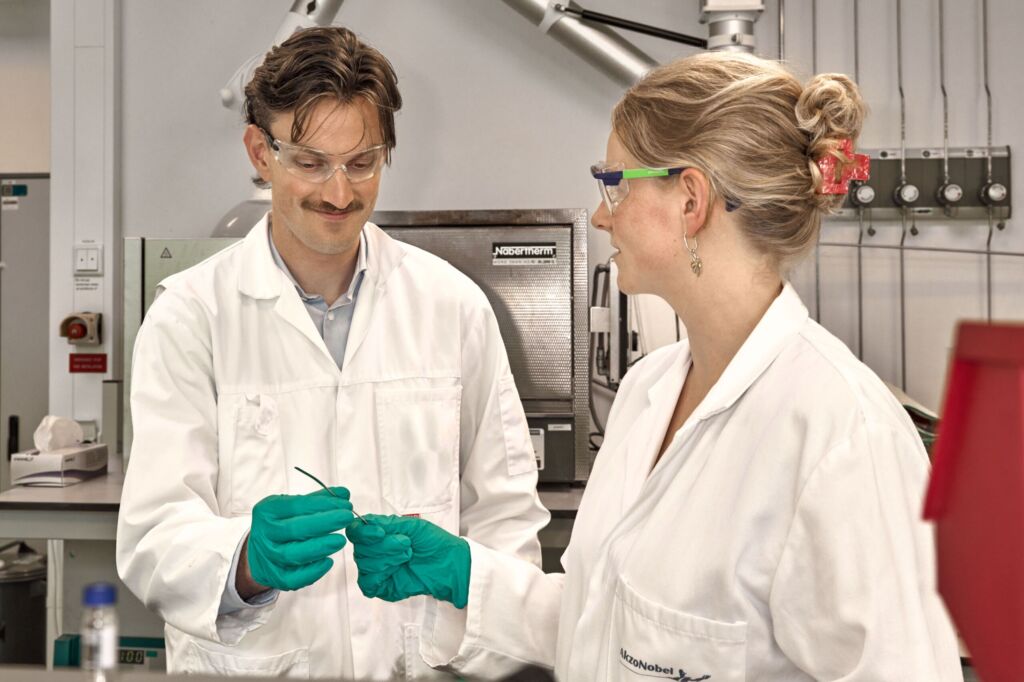
After this realization, the focus shifted completely. “We started focusing on catalysts—the materials that enable chemical reactions. If you make them more efficient, it has an impact on the entire chain.” What makes their approach unique is the combination with AI. “We test many things at once and use AI to predict what will work. But here’s what sets us apart: we also make use of all the experiments that don’t work. In science, everyone only publishes their successes. But if you want to accelerate progress, you also have to dare to learn from everything that fails.” He sees this principle—extracting value from what initially seems useless—reflected more broadly in entrepreneurship. “You fail constantly. But ultimately, those are the moments that move you forward.”
Entrepreneurship isn’t a straight line
What is often underestimated is just how unpredictable a startup’s journey is. “From the outside, it sometimes seems as though companies are following a clear plan,” says Yordi. “But in practice, you’re constantly making adjustments.” That dynamic requires a specific mindset. “On the one hand, you have to believe in something, but at the same time, you have to remain flexible. That can sometimes create tension. When do you hold on, and when do you let go?” According to him, it helps to always go back to the core: “What is the problem you’re solving? As long as you keep that in focus, you can adjust your strategy without losing your direction.”
What Helps Keep the Construction Going
Yordi sees several key factors driving Aefir Labs’ growth. “First and foremost: focus. You can’t do everything at once. Especially in the beginning, you have to make choices—and have the courage to stick with them.” A smart growth strategy also plays a role. “We’re pursuing a two-pronged approach: on the one hand, we provide consulting services to generate revenue and build a network. On the other hand, we invest in our own technology and IP.” This approach creates a balance. “It gives you breathing room. You don’t have to rely on major investors right away, but you can still build something that has the potential to become big in the long run.”
Energy and Motivation: Why You Do It
What drives him personally isn’t just the technology. “For me, it’s also about impact. You’re working on something that can really make a difference. That gives you energy.” That motivation is necessary, because the road ahead is long and uncertain. “There are plenty of moments when things don’t go your way. That’s when it helps to know why you’re doing it.” He emphasizes that passion doesn’t mean everything is easy. “The work we do is meaningful. And that’s what keeps you going, even when you don’t yet know where the ship will end up.”
The Next Step: From Startup to Scale-Up
According to him, the biggest challenge still lies ahead. “Having an idea is one thing. But scaling it up—that’s a whole different phase.” This is particularly complex in the chemical industry. “You’re dealing with high investments, regulations, and major industrial partners. Even a small pilot project can easily cost millions.” What does it take to make that leap? “Capital, of course, but also partners who are willing to go along with it. And timing—you have to be ready at the right moment. You build trust—first with small projects, then larger ones—until you reach a point where you can really make an impact.”
The Ecosystem: Why the Environment Matters
An important part of their journey takes place in the Key Region Leiden. “Our office is located at PLNT,” says Yordi. “That’s not necessarily because we’re in that sector, but because it’s a place where you meet other entrepreneurs.” That environment has proven to be valuable. “You run into people there who are working on the same things: financing, IP, growth. That helps enormously.” At the same time, their technical work is based in Delft. “That’s where we have the facilities we need. The great thing is that this combination actually works.” According to him, that’s typical of the region. “The region isn’t an isolated place, but a network. Leiden, Delft, Rotterdam. Everything is interconnected.”
Crossovers: Innovation Lies at the Intersection of Sectors
He sees the future of innovation emerging primarily at the boundaries between disciplines. “We’re at the intersection of chemistry and AI. That makes it interesting, but also challenging.” That combination calls for a new kind of talent. “You need people who understand multiple fields. That’s not easy to find.” That’s precisely where he sees opportunities in the Key Region Leiden. “With the universities and the Bio Science Park, there’s a tremendous amount of knowledge here. The challenge is to connect them more effectively.” In his view, that holds the key to the future. “The greatest innovations don’t arise within a single sector, but between them.”
Talent: Building a Team
One of the biggest bottlenecks in their growth is finding the right people. “You’re not looking for run-of-the-mill candidates. You’re looking for people who are curious and willing to look beyond their own field.” He sees the team as the foundation for everything to come. “You can develop technology, but a good team is what makes the difference.” The region plays a role here as well. “The talent is there. But you have to know how to find it and bring it together.”
Looking Ahead: From Idea to Construction
When he looks ahead, Yordi thinks not only in terms of growth, but also in terms of impact. “Within a few years, we want to help companies make their processes more sustainable. That’s a concrete step.” But behind that lies a greater ambition. “Secretly, I think it would be amazing to build our own factory someday. That’s truly a moonshot. Going from a calculation to something physical that’s actually up and running—that sounds fantastic to me.”
From Sparks to Impact
What this story shows is how something small can grow into something big. An idea that doesn’t work leads to a new insight. An experiment that fails accelerates the next step. An encounter within an ecosystem opens a new door. “You start small,” says Yordi. “But if you take the right steps with plenty of motivation, knowledge, and insights, it can grow quickly.”
This is the second interview in the “From Sparks to Impact” series, which features innovative entrepreneurs from the Key Region Leiden. The interviews are produced in collaboration with PLNT Leiden. Be sure to also read the interview with QuantaMap.
QuantaMap bestudeert het mechanisme achter falende quantumchips



SME grant for feasibility studies on innovations.
4 March 2026
Els Frankhuijzen bridges the gap between strategy and execution
9 February 2026
Leiden Bio Science Park core cluster in Wennink report
7 February 2026
Pioneers capital day April 8, 2026
6 February 2026
Innovation is the key to your growth
13 January 2026
The practical applications of autonomous tech
12 January 2026