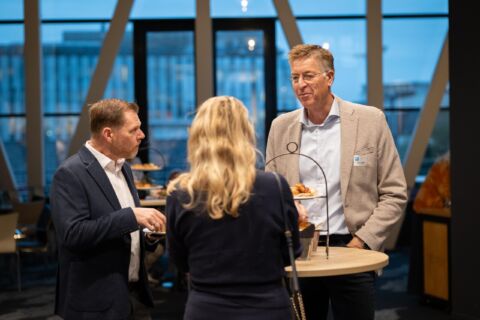
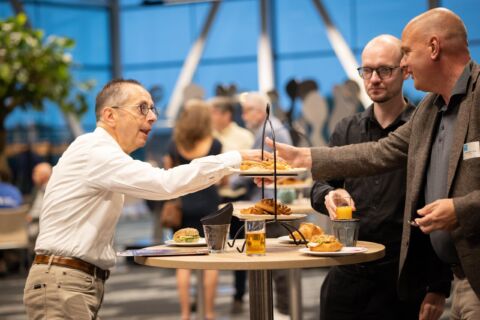
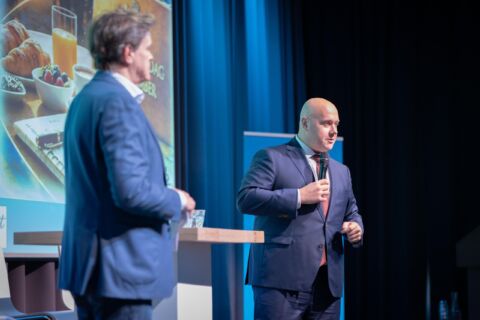
On the fourth Tuesday of September, during the Rhineland Miljoenenontbijt, regional business leaders, administrators, and politicians discussed how our region can remain economically strong. The national government’s plans, presented on Prinsjesdag, were adapted to our region during the event. Guests included Minister Thierry Aartsen, economist Otto Raspe, and entrepreneur Rob Postma.
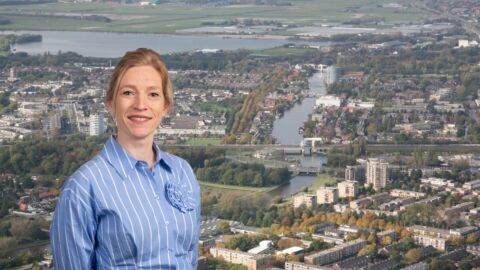
We were guests at Corpus, where, just around the corner at the Leiden Bio Science Park, researchers are working on a treatment that could save lives in a few years. A few streets away are entrepreneurs who provide the technology, software, and services that help make this possible. “To me, that’s broad prosperity in action,” said Alderman Wietske Veltman.
Wietske Veltman: “My appeal to The Hague: Make room for business activity in our region and help invest in it, because solutions are being devised and created in the Key Region Leiden. Take advantage of that.”
The Undercurrent: What the Numbers Don’t Immediately Reveal
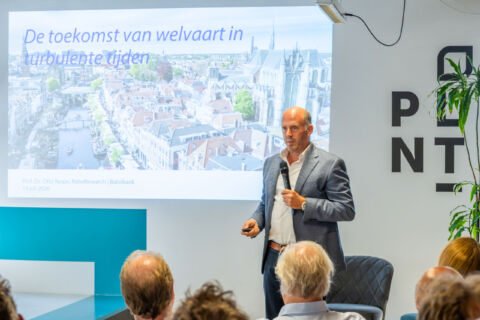
The economic analysis was provided by Otto Raspe, chief economist at RaboResearch. Using the iceberg metaphor, he showed that while the Netherlands appears to be performing well at first glance, developments below the waterline are at least as critical to our future prosperity: productivity growth that has been flat for about fourteen years, a tight labor market, and the question of whether the Netherlands will continue to innovate sufficiently. Even within the Netherlands, regions vary widely, with strong growth areas such as Amsterdam, Utrecht, and Eindhoven contrasting with regions like those around Tata Steel and East Groningen, which are lagging behind. His message to The Hague: don’t just look at the national picture, but focus more explicitly on a regional perspective.
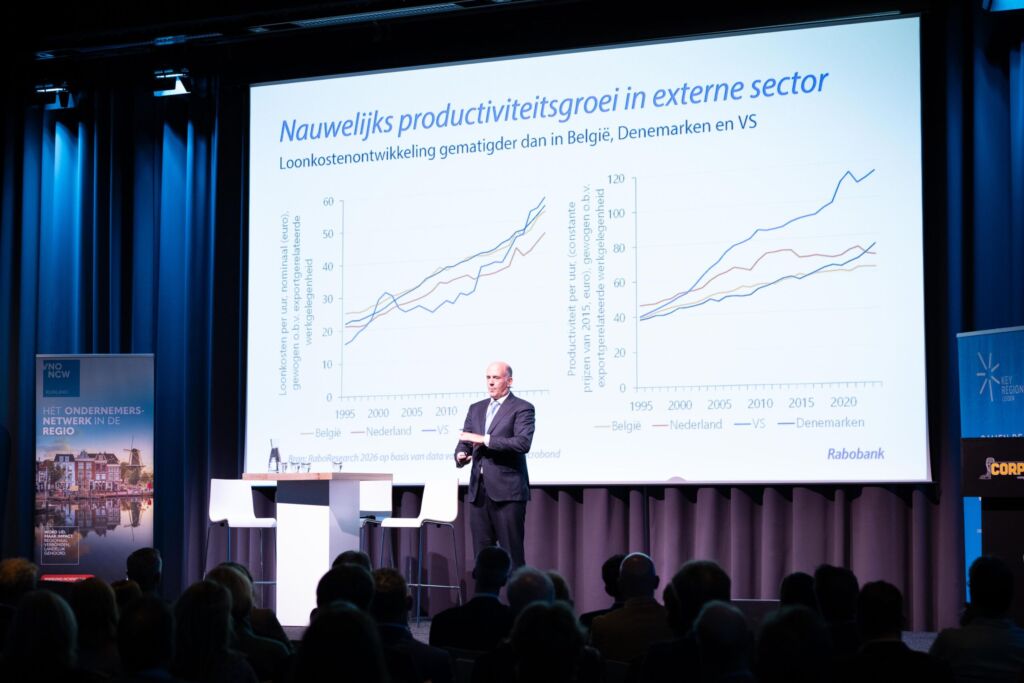
This is in line with Raspe’s earlier work. In addition to his role at RaboResearch, he is also Professor of Practice in Broad Prosperity and Regional Economics at Tilburg University. In his inaugural lecture late last year, he argued that the economy is reaching its limits. According to him, growth is not an end in itself, but a means to achieve broader well-being. Each region faces its own challenges that require tailored solutions. During the breakfast as well, Raspe emphasized that, in addition to work and income, happiness, social connections, and a sense of security are just as important. The annual survey by RaboResearch shows a decline in perceived safety and residential satisfaction in these areas. This year, the increasing job insecurity among young people is particularly striking, partly as a result of the rise of AI.
Labor Market: From Rules to Flexibility
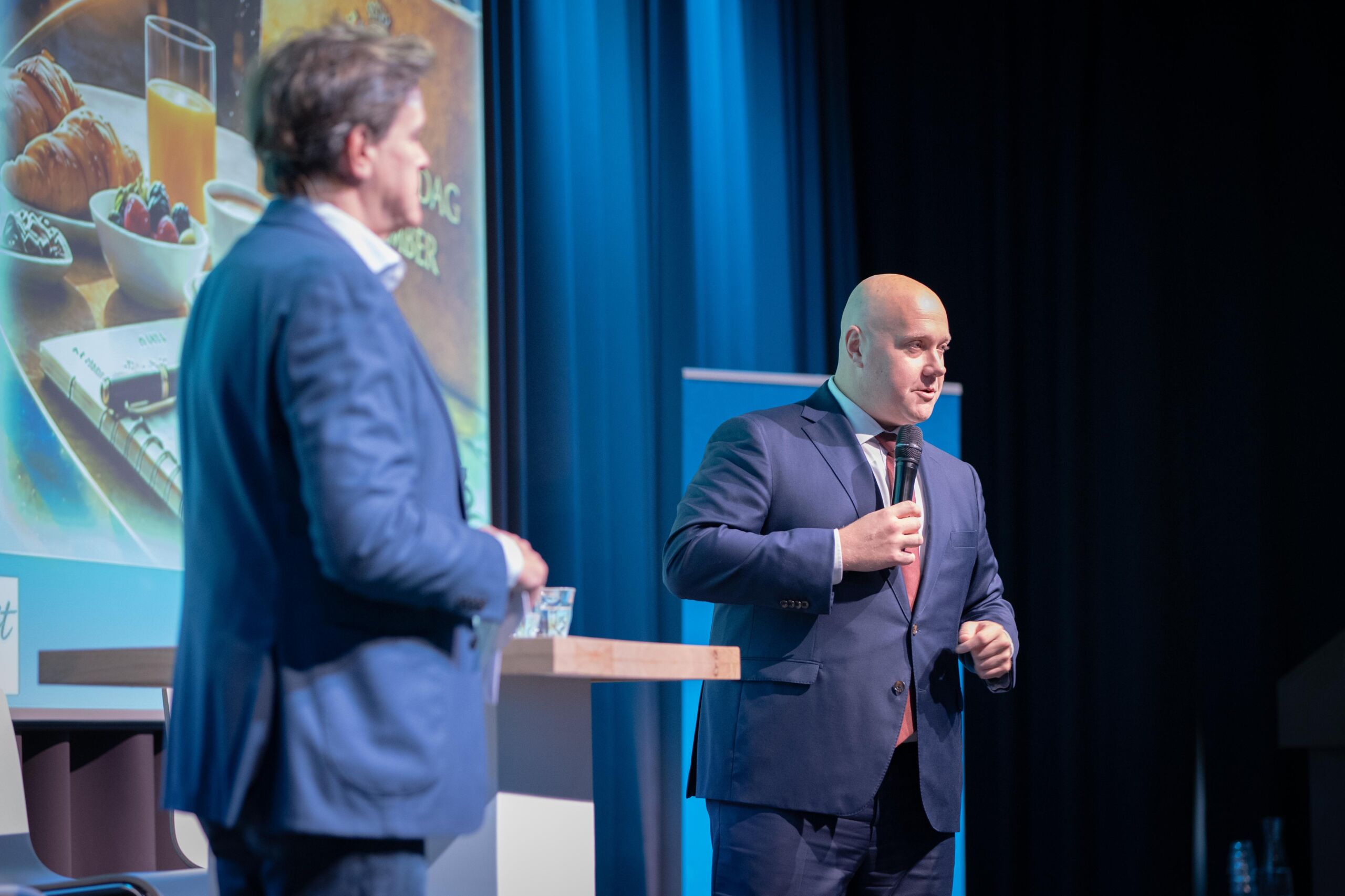
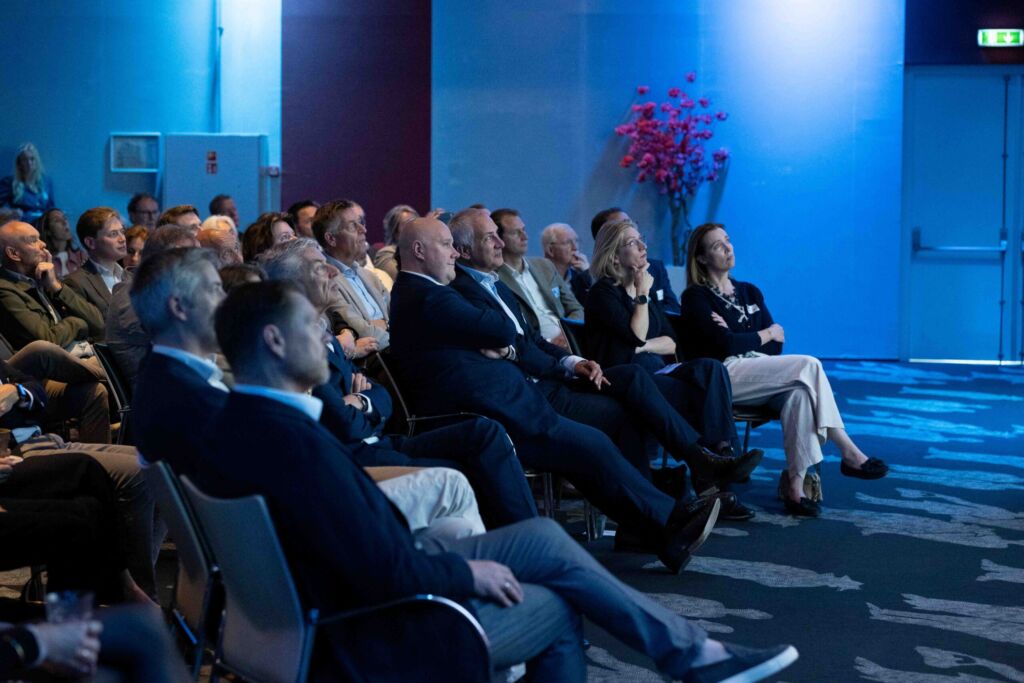
Thierry Aartsen, Minister of Labor and Participation, discussed the reforms needed to get more people into long-term employment and keep them there. He pointed out that parts of the current system have become too complex—a tangled web—with the result that people who want to work are actually held back by regulations. One specific target group consists of status holders who would like to work but are not permitted to do so. For Aartsen, the key lies in making choices, collaboration between the government and the business community, and a willingness to truly take action. According to the minister, substantial social reforms are needed. He firmly pledged to work toward putting employment back at the center of policy.
Minister Aartsen: “We are living in incredibly challenging times. The question is how we can maintain our prosperity in this world. One thing is certain: we need everyone’s full commitment to achieve that.”
Employers are having a very hard time filling job openings. At the same time, more than 1.2 million people are sitting on the sidelines, receiving benefits. These are people who are eager to work but are trapped in a web of regulations. That’s a shame—both for them and for our economy.
That is why I want to put work back at the center. The current system focuses on what you can’t do—and on the security of benefits. That has to change. For example, by stepping in much earlier: not only after someone becomes unemployed, but before that happens. And, of course, by focusing much more on a person’s talents and potential.
Employers also have a role to play here. The hiring process is often still outdated, with too much emphasis on degrees from twenty years ago and AI-generated cover letters. Yet what matters more is where someone’s dreams lie, what they’re good at, or what makes them happy. There’s still a lot of room for improvement here. “For everyone.”
From the Field: Airbus as a Model for Small and Medium-Sized Enterprises
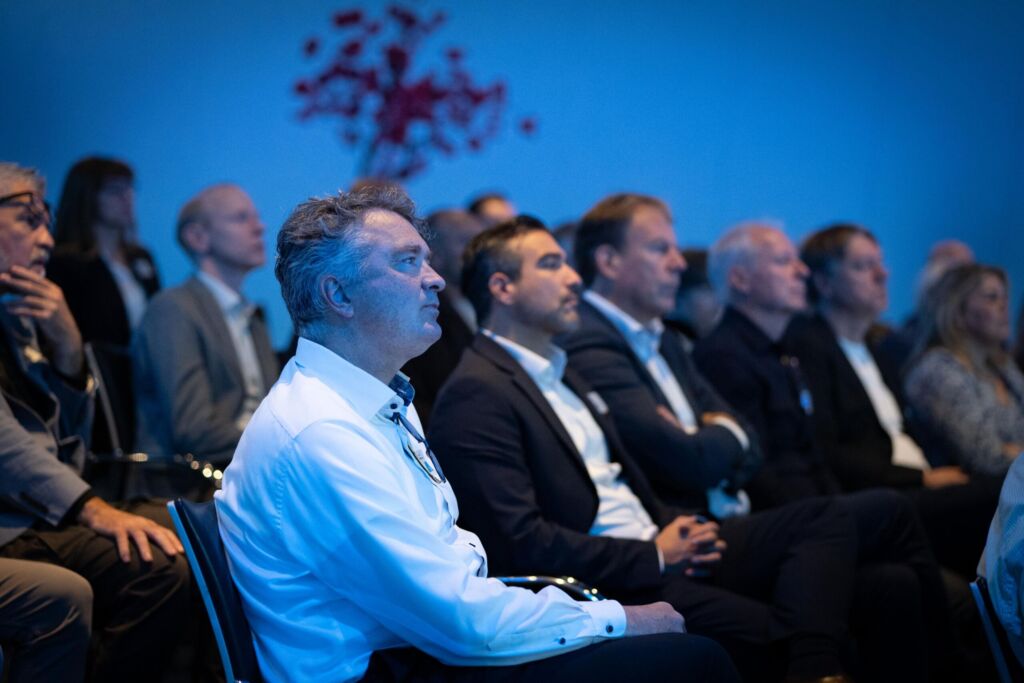
Rob Postma, CEO of Airbus Netherlands, concluded with a look at his own organization. He is a major employer in the region and would like to expand Airbus’s presence in the Netherlands and bring more “orange” into Airbus. From its facility in Oegstgeest, where approximately two hundred people work on high-tech solar panels and aerospace components, the company faces challenges that many Rhineland entrepreneurs will recognize: finding sufficiently qualified personnel, securing room to invest, and maintaining a competitive edge against foreign competitors. His call to action is to adopt a broad European focus. Cross-border collaboration is crucial for the space sector. As an SME, he also highlighted the practical challenges he faces: finding housing for international employees—which is currently still limited by expat regulations—and the limited capacity of the power grid. These factors hinder expansion. When asked about AI within his company, he indicated that its application is currently focused on automating administrative and legal processes—within a controlled and secure in-house environment. This development, too, is constantly evolving and will help maintain the company’s competitive edge.
Rob Postman: “I want more Airbus in the Netherlands, and I want more orange at Airbus.”
A great networking opportunity
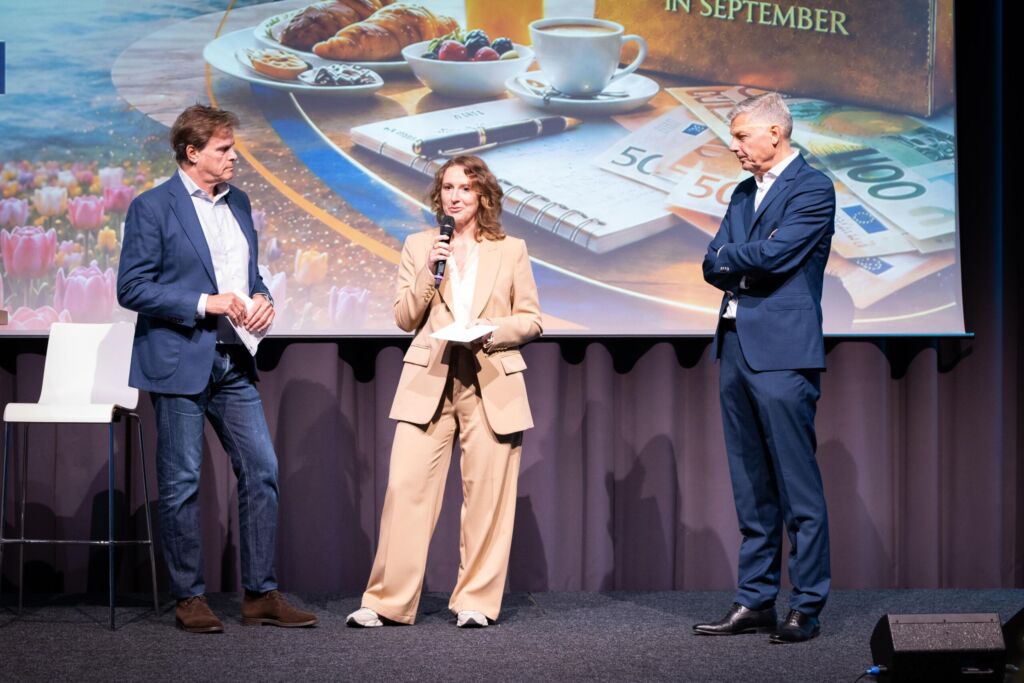
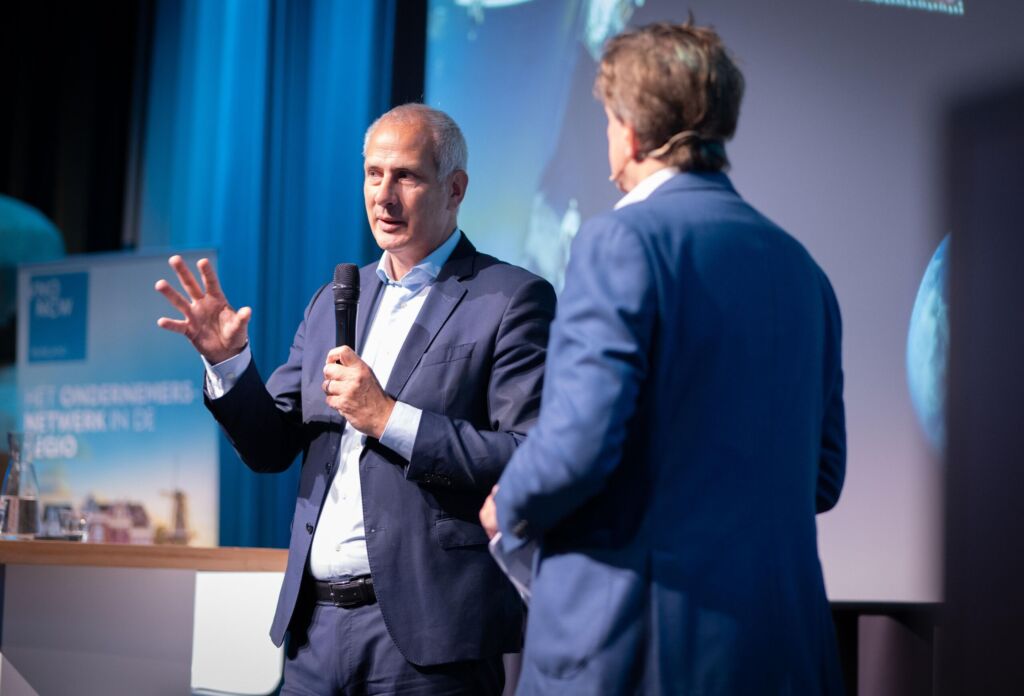
Under the guidance of chairperson Alex de Vries, the same question kept coming up: What is needed to encourage companies in the region to invest and grow, and how can entrepreneurs, the government, and research institutions collaborate more effectively to achieve this? Tino Meijn, chairman of VNO-NCW Rijnland, called on everyone to continue seeking each other out, to trust one another, and to go for it.
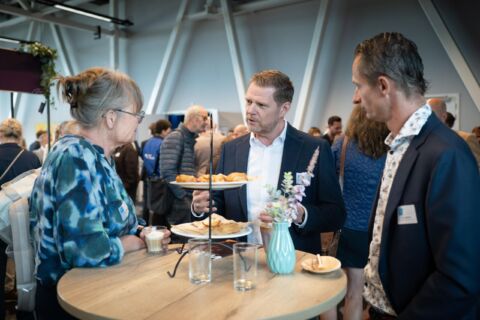
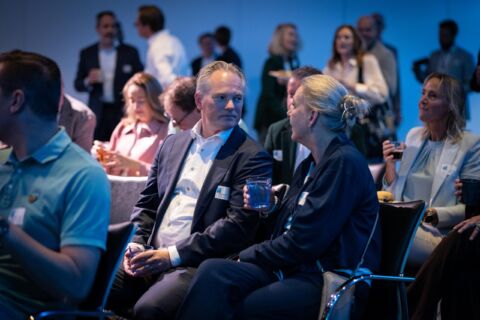
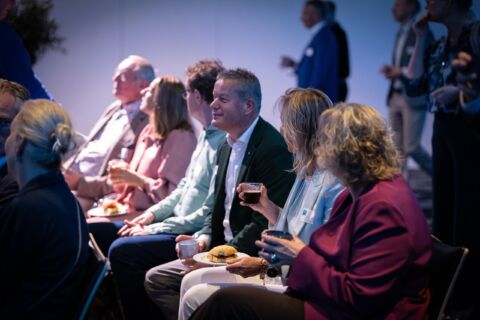
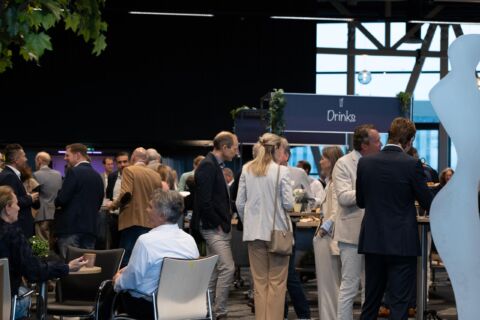
In addition, the Miljoenenontbijt provided plenty of opportunities to network and reconnect with existing contacts. Thanks to VNO-NCW and Rabobank for joining forces, and to Corpus for their excellent hospitality.
Would you like to join one of our networking events? Sign up for our newsletter to be the first to know.
[Column] How far into the future do you plan?
8 October 2026
New Round of Vouchers for SME Digitalization
6 October 2026
Sign up now for our SME workshops
6 October 2026
Tech Discovery Days at Unmanned Valley
5 October 2026
Miljoenenontbijt: Reforms and Investments Needed for Broad Prosperity
24 September 2026
Holland Rijnland Economic Dashboard
7 September 2026